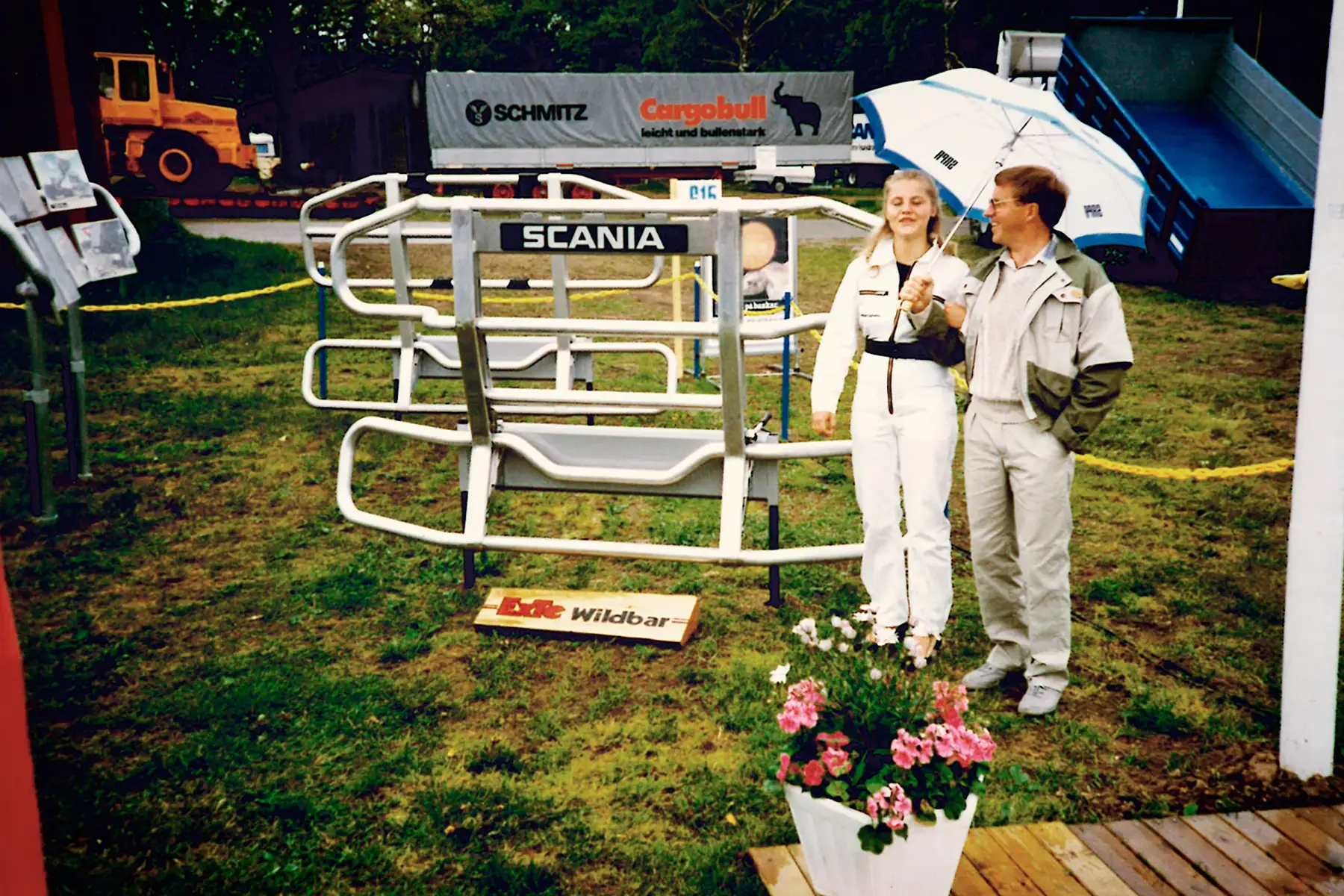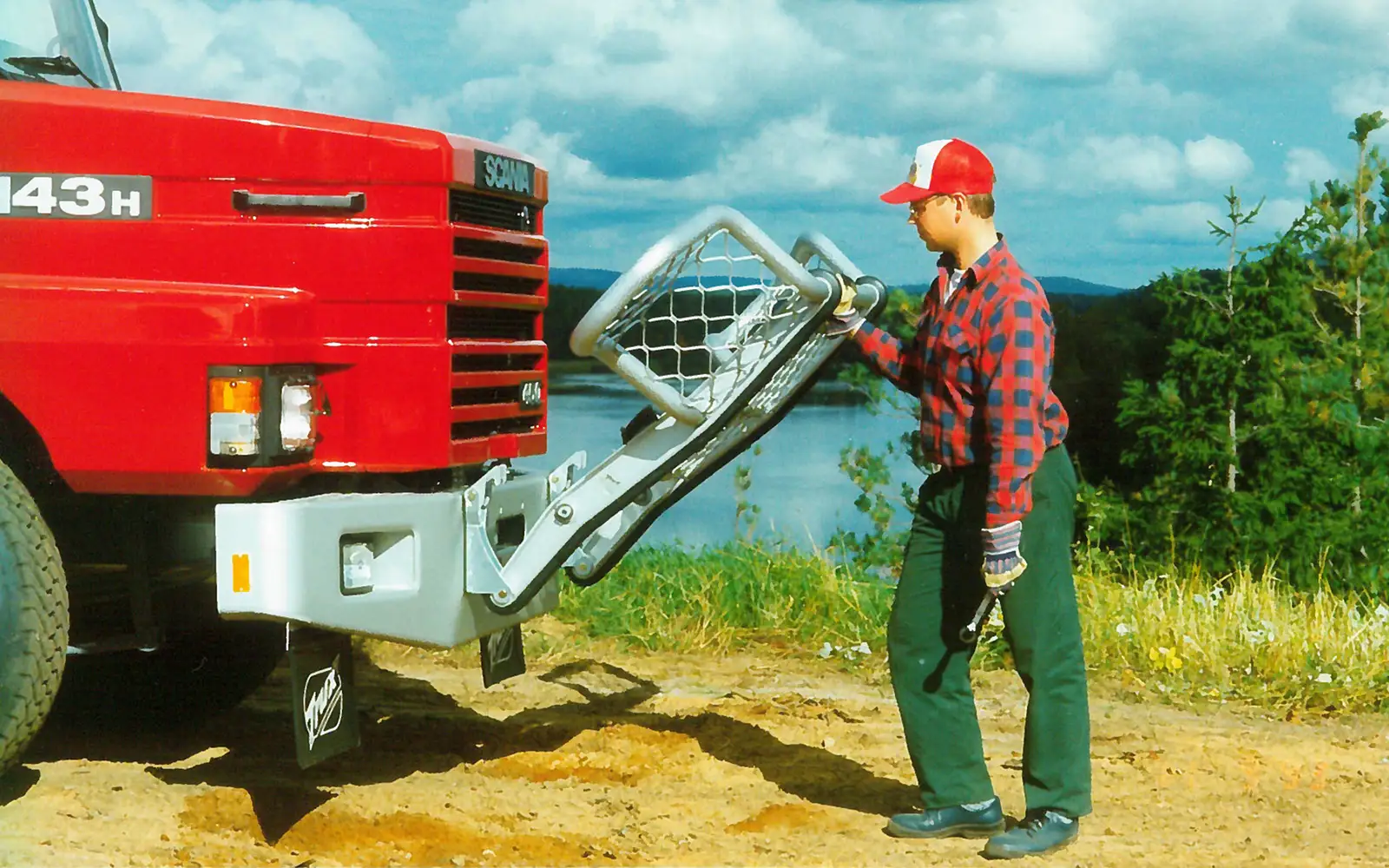


This year, the Hälsingland-based company Trux AB celebrates 40 years as Europe’s leading manufacturer of front protection. But if founder Axel Sandstedt had not believed so strongly in the idea, it could just as easily have ended in a spectacular flop – almost immediately.
The idea of manufacturing front protection for trucks came to Axel Sandstedt through another company, Björnavagnar. They, in turn, had received the question from hauliers who had grown tired of the costly wildlife damage caused by the moose boom of the 1980s, explains his son Peder Sandstedt:
“The owner of Björnavagnar, Björn Dahlberg, asked my father whether ‘moose fences’ might be something for him – ‘you work with aluminium, after all’. He sent down a steel prototype, and Dad concluded that it could be. As the owner of ExTe, a world leader in aluminium load-securing systems, he was already working with hauliers.”
ExTe developed an aluminium prototype, which was initially manufactured by Sapa.
In 1986, Axel Sandstedt sold ExTe – the same year that Trux saw the light of day. In the new company, he committed fully to front protection. But then the Swedish Road Safety Office of the time reacted. The authority considered front protection to be harmful to vulnerable road users and decided to ban it.
“There we were, with a lot of products that might not have been worth anything,” continues Peder, who also worked in the company.
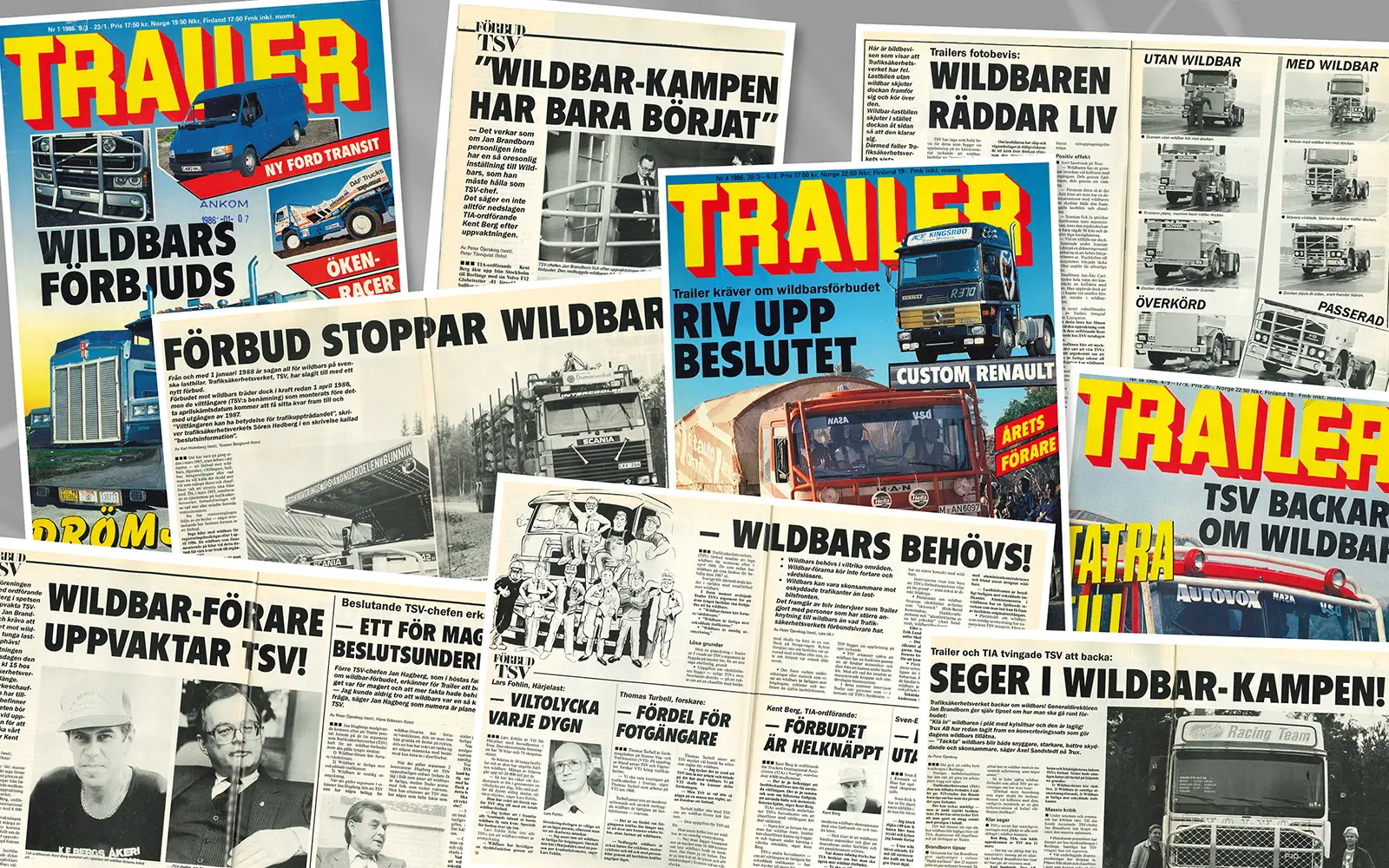
But Axel was sure of his case, and he also had the magazine Trailer behind him. He contacted Chalmers University of Technology, which, following tests, was able to show that having front protection was at least no more dangerous than not having it.
“At Trailer, we followed the issue and also published a number of articles about it. Among hauliers, there was no doubt – they believed that front protection served a purpose,” says Rutger Andersson, senior editor at Trailer.
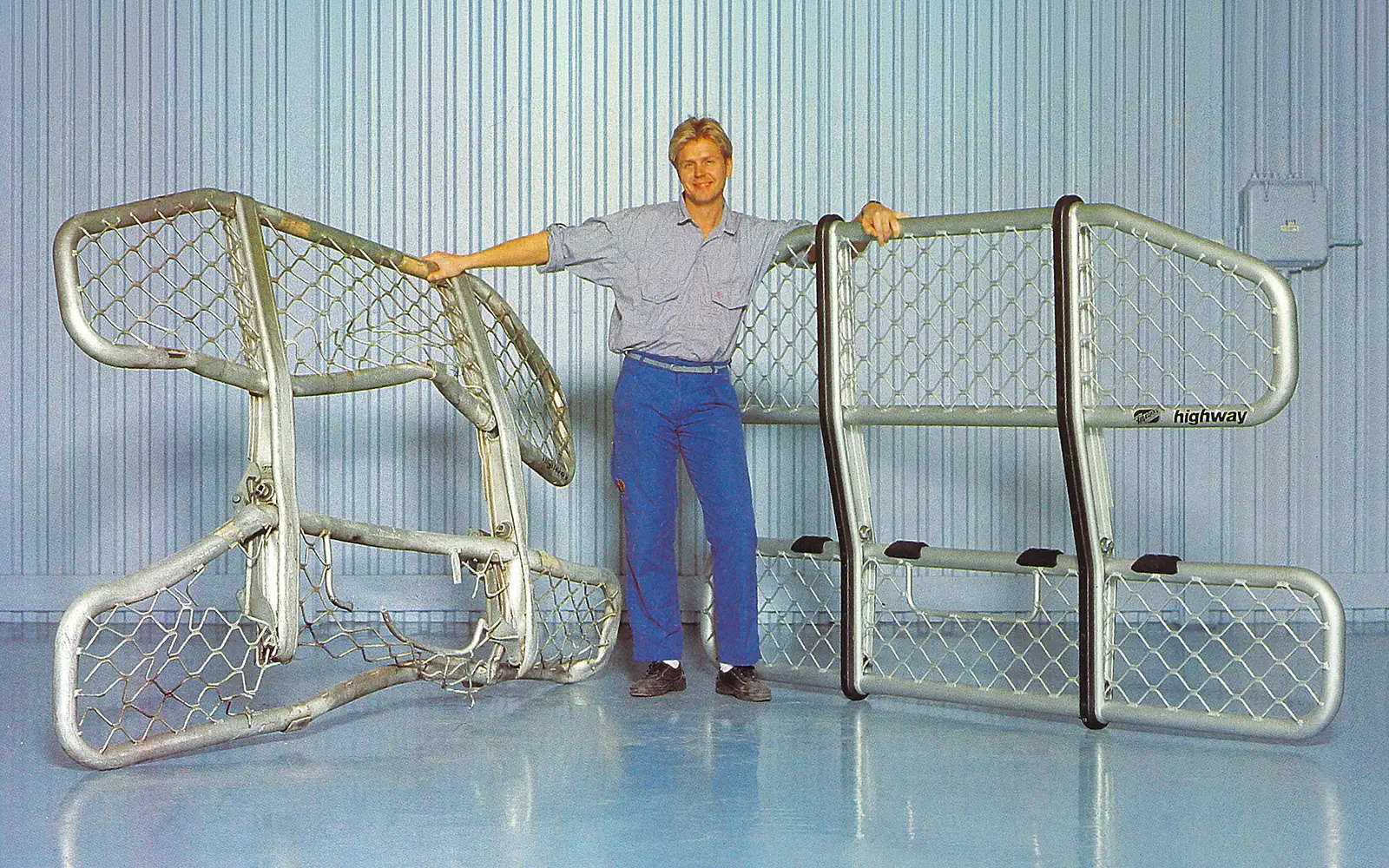
However, the posts in the construction were considered more dangerous than the front protection itself. But if they were “padded” – in other words, made softer and the open tubular construction covered – they would no longer pose a danger to vulnerable road users.
“The solution was two rubber dampers mounted on the posts, together with a mesh between the tubes. After that, the Swedish Road Safety Office backed down and granted Trux an exemption from the new law,” says Hasse Olsson, site manager at Trux from 2009 to 2021.
With the adaptations in place, it became completely legal to have front protection, and the insurance companies were supportive, as fewer wildlife-related damages were also in their interest.
“The law remained in place for a long time, but the business could continue to move forward,” concludes Hasse Olsson.